
Below you will find links to some interesting history-related articles I’ve read recently, a photo from a history-related visit, and an item about the history/practice of writing.
Enjoy!
History writing
- This ‘unified theory of the handbag’ traces the accessory from evolution-driving invention through language and storytelling.
- A manuscript discovered in a stack of family papers has been confirmed as a previously-unknown ‘slave narrative’ documenting Thomas White’s escape and subsequent free life.
- Sharing this one primarily because I love their nickname (the Night Witches!) but also because these Russian women pilots’ efforts during the Second World War were both daring and important.
History
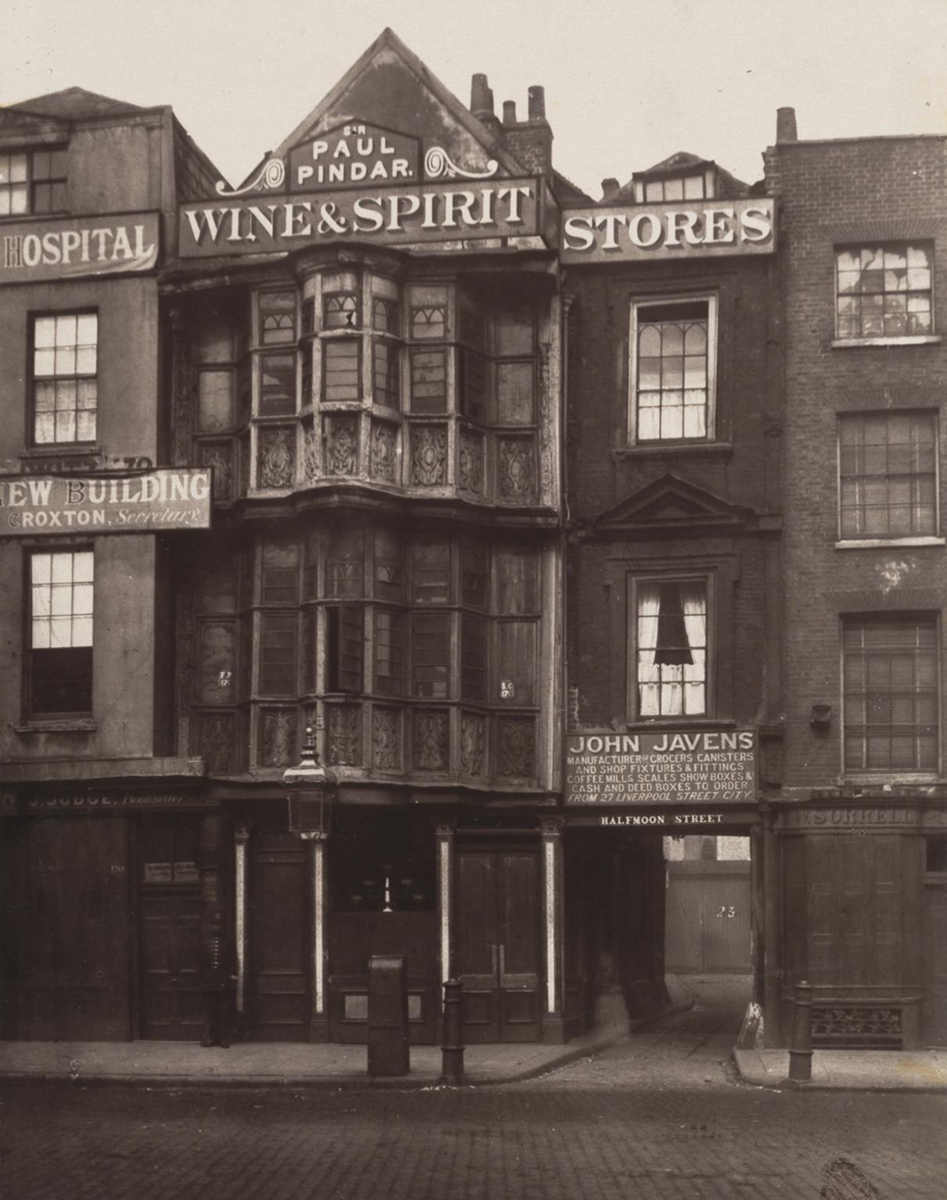
The Sir Paul Pindar, Bishopsgate Street, 1878, photographed by Alfred and John Bool, printed by Henry Dixon. Image courtesy of Tate (CC BY-NC-ND 4.0 DEED).

The façade of Sir Paul Pindar’s house, built in 1600 and demolished in 1890, on display at the Victoria and Albert Museum (V&A).
The façade of Sir Paul Pindar’s house, built in 1600 and demolished in 1890, on display at the Victoria and Albert Museum (V&A).Thank you to Matt Brown for connecting the dots on this one for me. I’ve visited the V&A countless times and seen the above wooden façade hanging from the wall on many of those occasions. But it was only via a recent Londonist: Time Machine post that the name of the former home owner – Sir Paul Pindar, a wealthy merchant – jogged my memory that the façade belonged to a building captured for posterity by The Society for Photographing the Relics of Old London.
So, I headed to the museum for a closer look last week and ticked another location (kind of) off my list.
For more, see my post from last year where I visited and re-photographed as many of the surviving relics as I could find/access.
Writing
I’m not going to get too deep into the debates around AI. In short: I agree it’s bad for the environment and bad for writers/artists’ intellectual property, but has potential time-saving benefits (I’ll use it to transcribe a recording of an interview; never to write a first draft of the subsequent story). But as someone who always carries a notebook and pen in my bag, and captures the majority of my ideas on paper, I can appreciate this poet’s pencil-led defence against AI.