Below you will find links to some interesting history-related articles I’ve read (and watched) recently, a photo from a history-related visit, and an item about the history/practice of writing.
Enjoy!
History writing
- Watch the full cut of ‘Mother Ireland’ a 1980s documentary exploring Ireland’s personification as a woman and the links between that image, nationalism, and feminism. The film was banned before it could be broadcast by rules introduced in 1988 to keep the voices of people from Irish republican and loyalist groups off the airwaves (actors would instead read their words). In 1991, the film’s director, Anne Crilly, wrote of her disappointment that “one of the very few programmes which examine[s] Irish history from a woman’s perspective” was prevented from being shown. An edited version was eventually televised in 2001.
- Explore the mark Neolithic people left on Scotland’s Orkney Islands, and how two decades of excavations at the site left a mark on those involved, too.
- We’re told that Australia was colonised under the principle of terra nullius (because it ‘belonged to no one’; or, at least, no civilised, permanent dwelling, land cultivating people). Why then did England, under the captaincy of Arthur Phillip, complete almost every single step to enter a treaty with the indigenous people – a common practice when dealing with those who showed land cultivation or permanent construction or social reason? (And why weren’t we taught this in school?!)
- Pair with another story new to me (who was born, raised, and lived my first 20-odd years in Australia) about a group of students who protested racism and segregation in 1960s New South Wales.
History
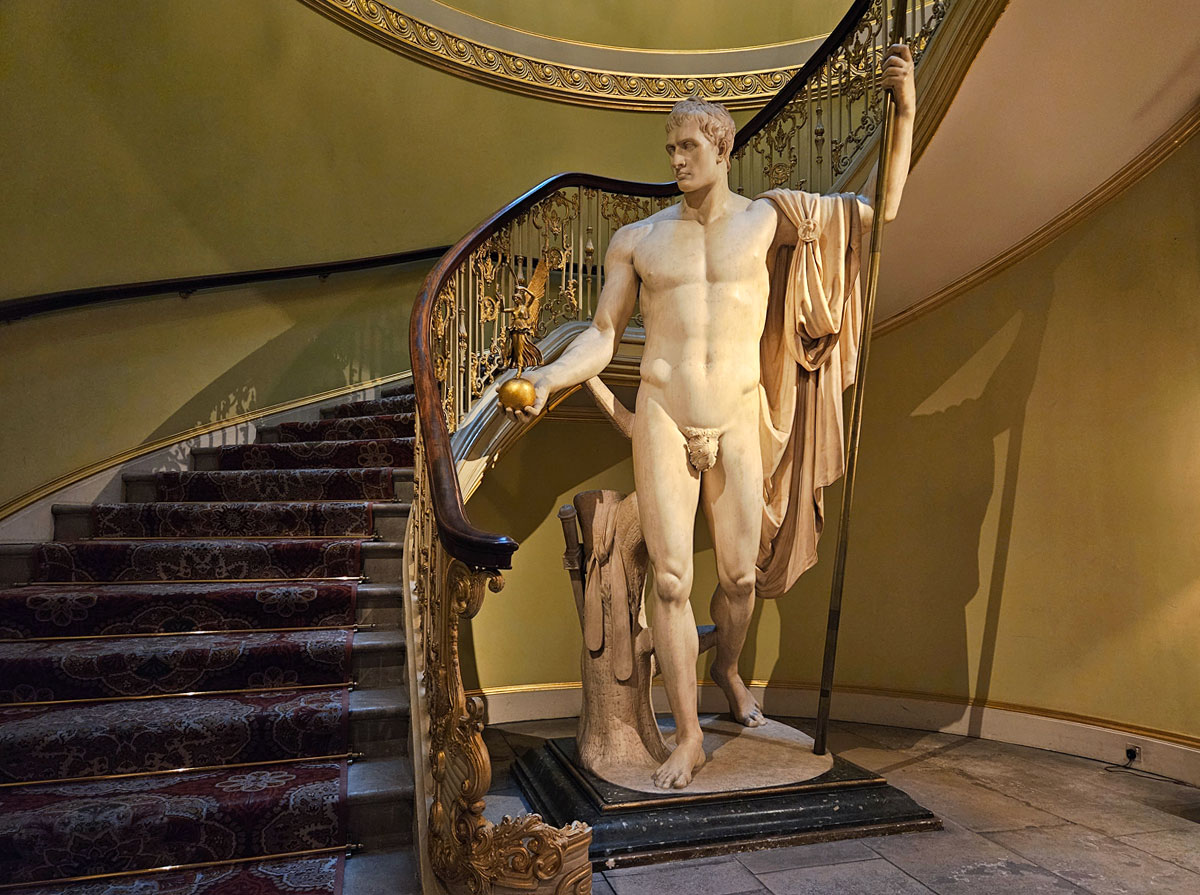
Napolean as Mars, holding the winged figure of Victory in his hand, sculpted by Antonio Canova.
If you had led one of the most famous military victories in your country’s history, would you commemorate it by installing a double-life-sized naked statue of your enemy in your home?
As you can see in the photo above, that’s what Arthur Wellesley, first Duke of Wellington (1769–1852), did. At the base of the stairs in Apsley House, the Duke’s residence on the corner of London’s Hyde Park, stands an 11-foot statue of Napoleon Bonaparte, created by the Italian sculptor Antonio Canova between 1802-1811. The French emperor is depicted as the Roman god, Mars, and apparently, when he first saw the statue, he was embarrassed by its extremely flattering (read: unrealistic) physique.
Following Bonaparte’s defeat at the Battle of Waterloo in 1815, the statue was gifted to Wellington by the Prince Regent (later King George IV). He had to have his floor reinforced to support its weight.
The official Apsley House line is that it’s “a trophy of war”. It’s one of many images of Napolean displayed throughout the house which visitors are told acted as “a daily reminder to the Duke and his distinguished guests of the scale of his achievement in defeating Europe’s nemesis”.
A couple more photos from my visit:
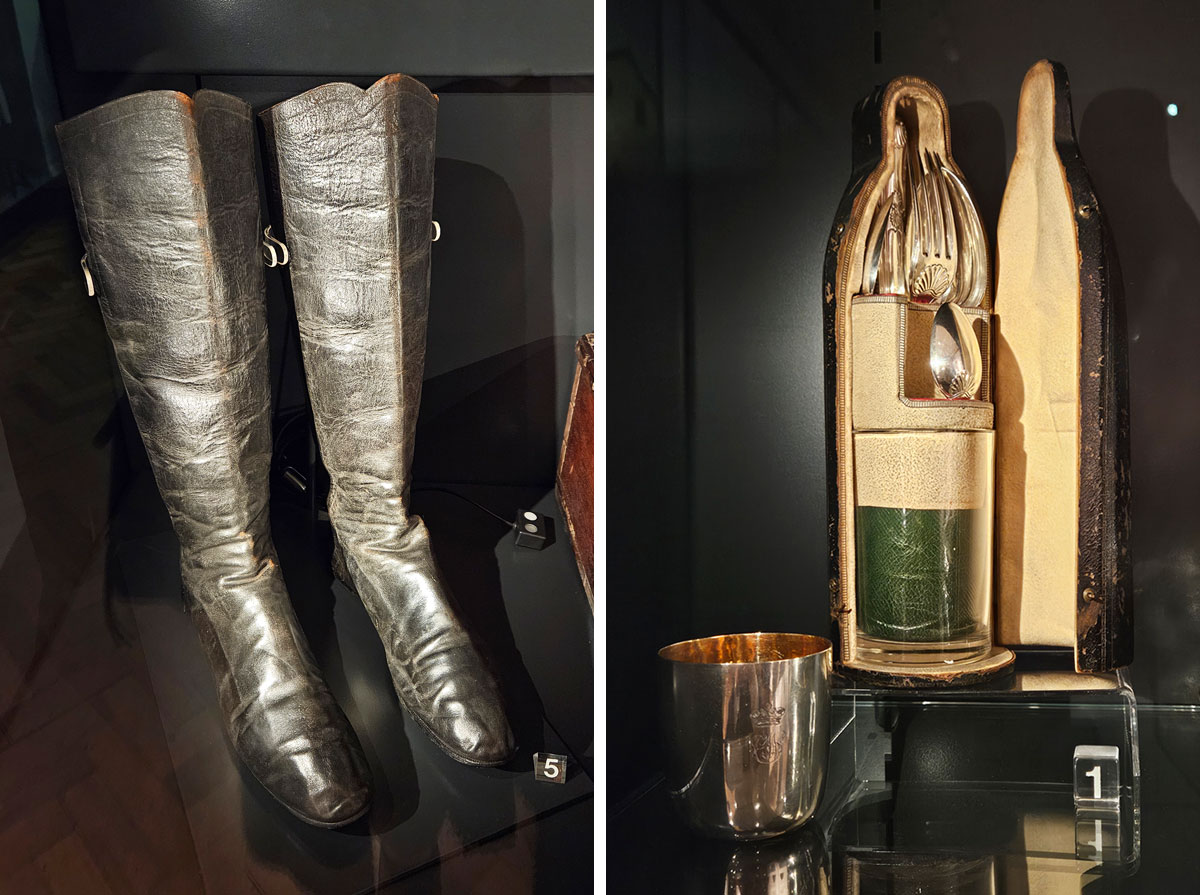
Left: the original Wellington boots; right: Wellington’s rather fancy leather travelling canteen, which held a glass tumbler, silver beaker, and cutlery.
Writing
An interesting read examining whether we’re losing the ability to write by hand, and what else we might lose along with it.