
Below you’ll find links to some interesting history-related articles I’ve read recently, a photo from a recent history outing, and an item about the practice of writing history.
Enjoy!
History writing
- It’s incredible to think that sometime in the early 1500s, a precious gold necklace and locket was dropped in a field in the West Midlands of England, and around 500 years later it was dug up intact. It’s perhaps even more precious because it’s a rare piece that shows the love once felt between Henry VIII and his first wife, Katherine of Aragon.
- 8 February, I have learned, is celebrated by some as the ‘anniversary of King Taejong falling off his horse’. For on that day in 1404, Taejong of Joseon, a Korean ruler, was, according to the contemporary ‘Veritable Records of the Joseon Dynasty’, “riding a horse with a bow and arrow, shooting a deer. The horse overturned and he fell from it, but was not injured. He looked around and said, ‘Don’t let the historians know’.” Unfortunately for him – but humorously for us – his request was ignored. (Hat tip to Sam Ottewill-Soulsby via Bluesky.)
- Ed West’s historical crossover articles are full of fascinating tidbits, like the fact 1889 was the year the Eiffel Tower was completed, Adolf Hitler was born, and Nintendo was created. I first stumbled upon part 3, and have since gone back and read part one and part two.
- Discover the often-unrecognised women who typed manuscripts from dictation and messy handwritten drafts, freeing up [male] authors to focus on the development of their work rather than its production.
History
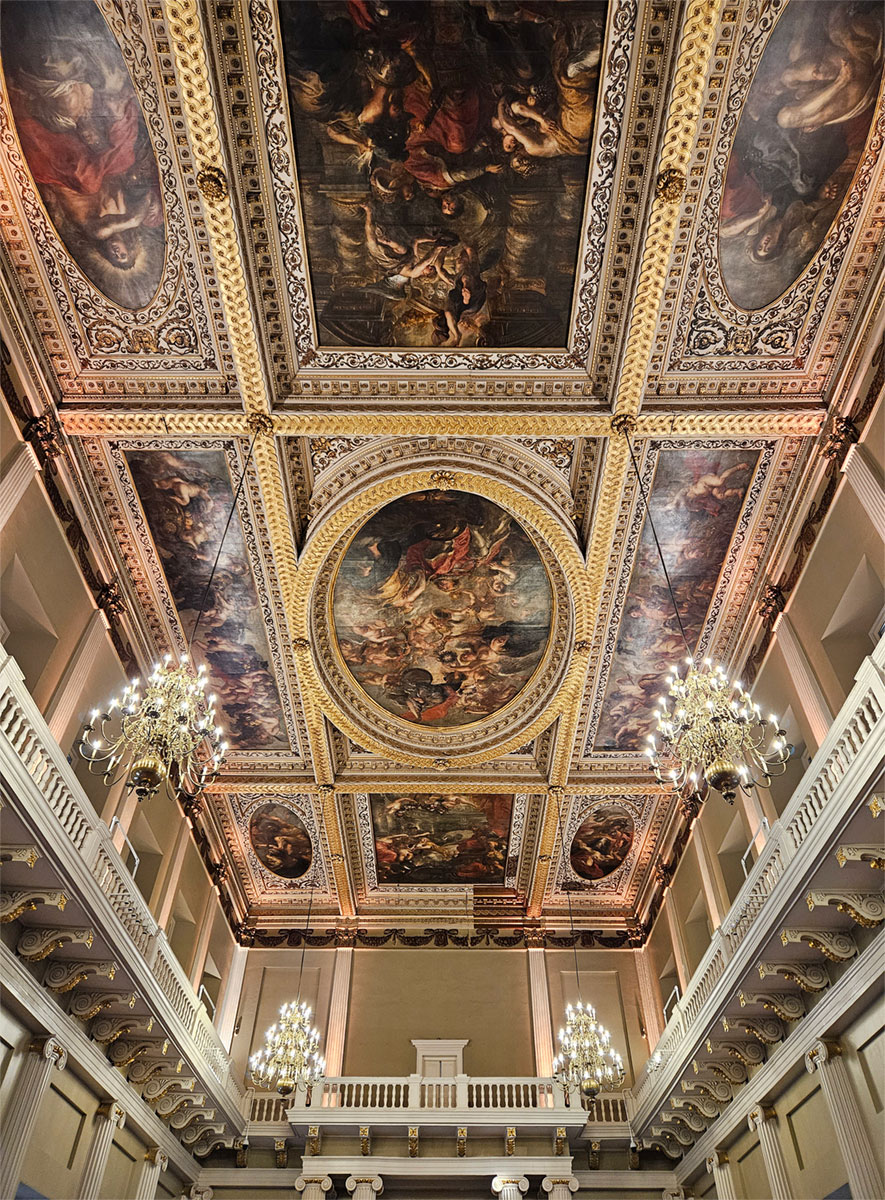
The ceiling of Banqueting House.
Banqueting House, the last remaining building from the old Whitehall Palace in London, has just reopened after two years of conservation. I was lucky enough to visit on its first public open day in February.
Originally known as York Place and owned by Cardinal Thomas Wolsey, Whitehall Palace’s transformation into a royal residence was another case (like Hampton Court Palace) of King Henry VIII going: “I like what you’ve done with the place, you don’t mind if I take it, do you?!”.
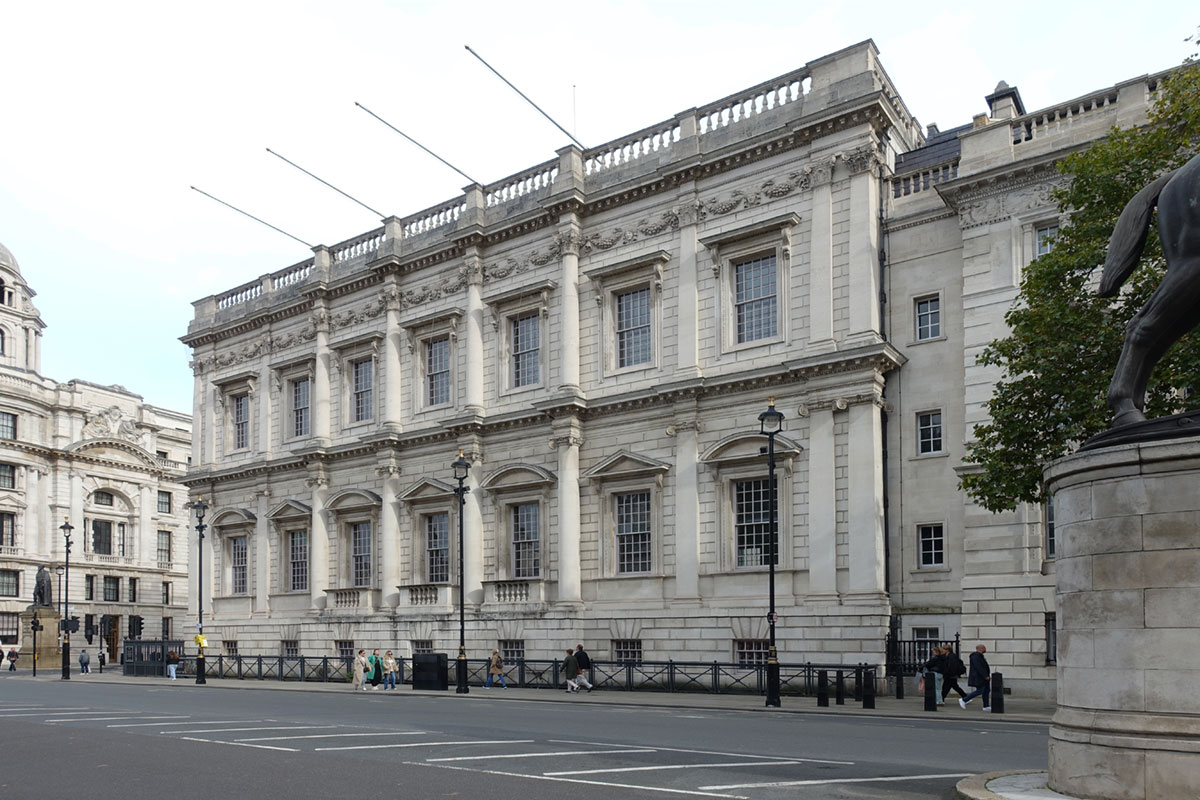
The exterior of Banqueting House, photographed previously as part of my relics of old London tour.
But it was actually King James I, in 1619, who commissioned architect Inigo Jones to create the Banqueting House. The result is cited as the first Palladian style building in England. However, it’s perhaps the ceiling for which Banqueting House is most famous. It features paintings by Peter Paul Rubens, commissioned by King Charles I, and installed in 1636. Charles got a final glimpse of them as he was led through the room and out a window to the scaffolding where he was executed in 1649.
A fire in 1698 destroyed everything at Whitehall Palace, except the Banqueting House. In the years since, the building has been used as a chapel and a military museum (it once displayed the skeleton of Napoleon’s horse), but has now returned to its original use as an event space.
A humble request for the next phase of conservation/renovation: return the downstairs, used as a drinking den by King James I, to its former grotto style, complete with fountains and seashell-covered walls.
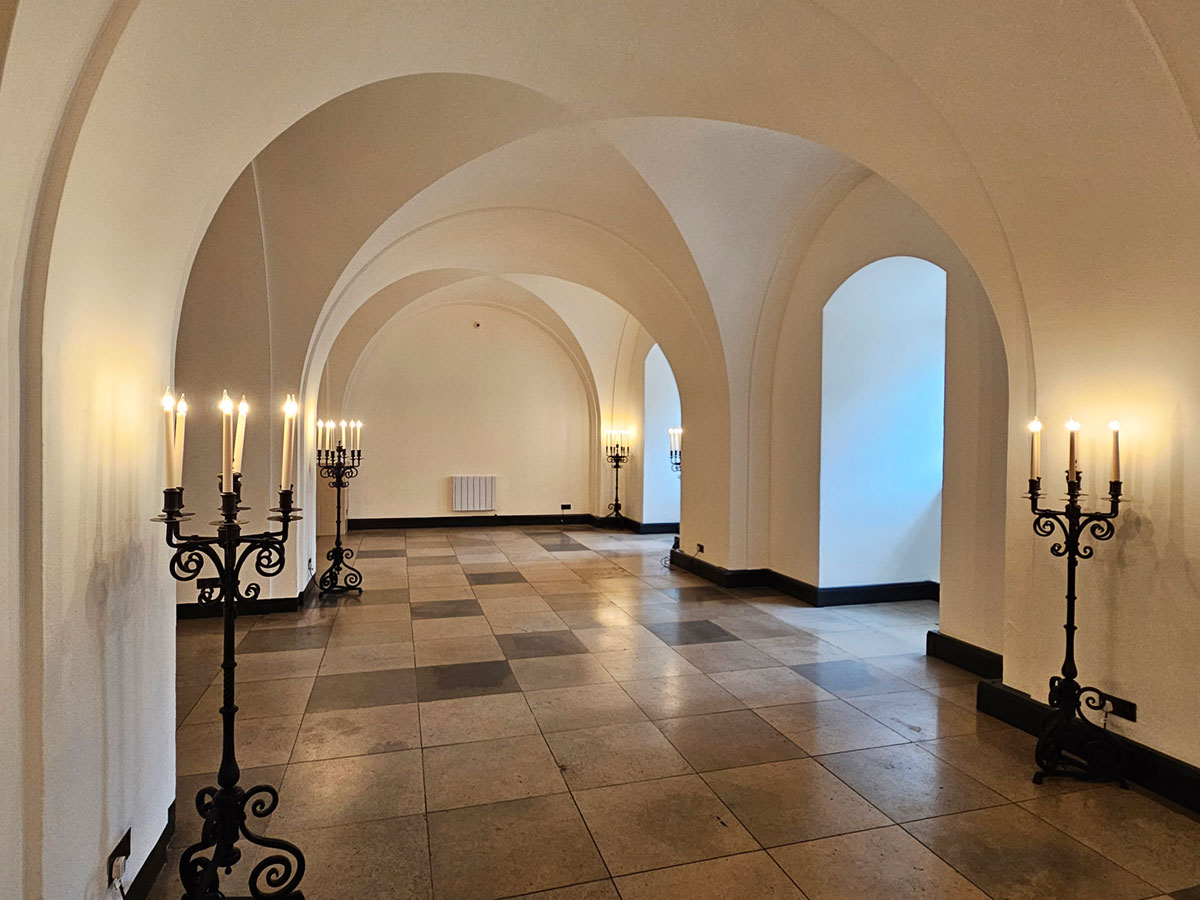
King James I’s former drinking den in the basement of Banqueting House.
Writing
Julian Sancton shares the ‘research behind [a] banging work of narrative history’: his story about the 21st Century discovery of the sunken 18th Century Spanish galleon, San Jose. “A lot of the book has to do with the joys of archival research. It’s a bit of a challenge to try to make that exciting, but it really is so exciting for me to find treasure in those archives, and I tried to communicate that to the reader.”