
Below you’ll find links to some interesting history-related articles I’ve read recently, a photo from a recent history outing, and an item about the history/practice of writing.
This end/start of year edition also includes a bonus list of the top three stories I published in 2025 (according to the data) and my favourite three stories I published in 2025 (according to me).
Enjoy!
History writing
- It took her daughter-in-law to believe the extraordinary life stories of Patricia Hartwell and write a memoir that “release[d] Pat from the suspicions around her legend”.
- A writer’s journey to learn the “portable inheritance” of his maternal family’s native language.
- A church restoration inspired research into a pair of 19th Century sisters who went on a North African tour “that very few men had even done, let alone for two women”.
- Linguists have started work on the first complete dictionary of ancient Celtic.
- The secret history of unicorns.
History
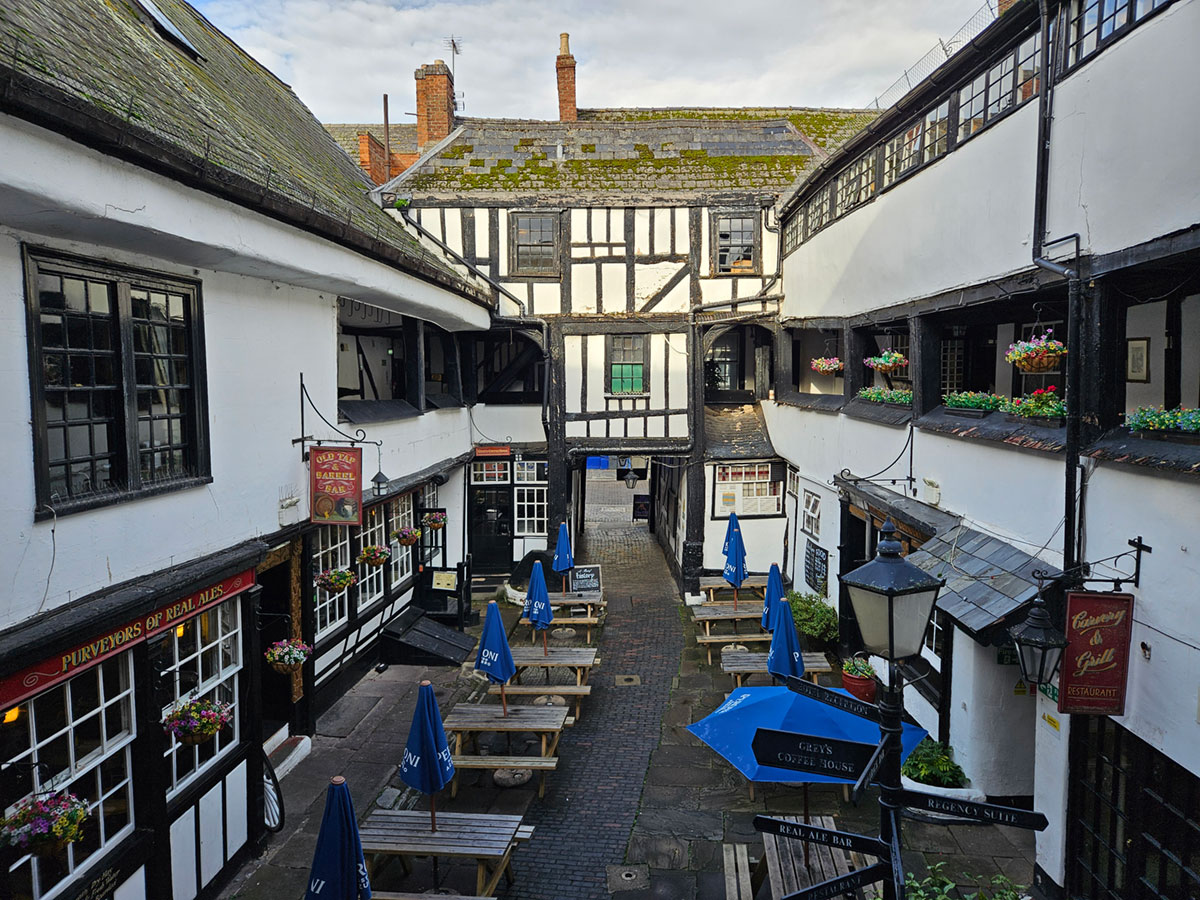
View from the gallery of The New Inn down onto the courtyard and towards the front carriage way.
At the end of autumn, I spent a few days in Gloucestershire, southwest England, and made a point of staying at The New Inn, a Grade I-listed Tudor-style former coaching inn built in the mid-15th Century. It was commissioned by a monk, John Twyning, who was attached to the (former) Benedictine Abbey of St Peter, and it passed to the ownership of Gloucester Cathedral after the Dissolution. It occupies three frontages on Northgate Street (two of which are now mobile phone shops) from where you enter through a carriage way into the central courtyard. Above are two storeys (plus an attic level) of ‘chambers’ (now hotel rooms) accessed via open ‘galleries’ (now semi-enclosed balconies and passages). A second carriage way at the far end of the courtyard leads through to an enclosed yard at the back of the building.
Truth be told, as a modern hotel, it’s a little tired; but as a historic building, it’s pretty spectacular, and despite multiple repairs and remodels over the years, it still retains many original features. It’s considered the most complete surviving example of a Medieval galleried courtyard inn in the country.
A few more pics:
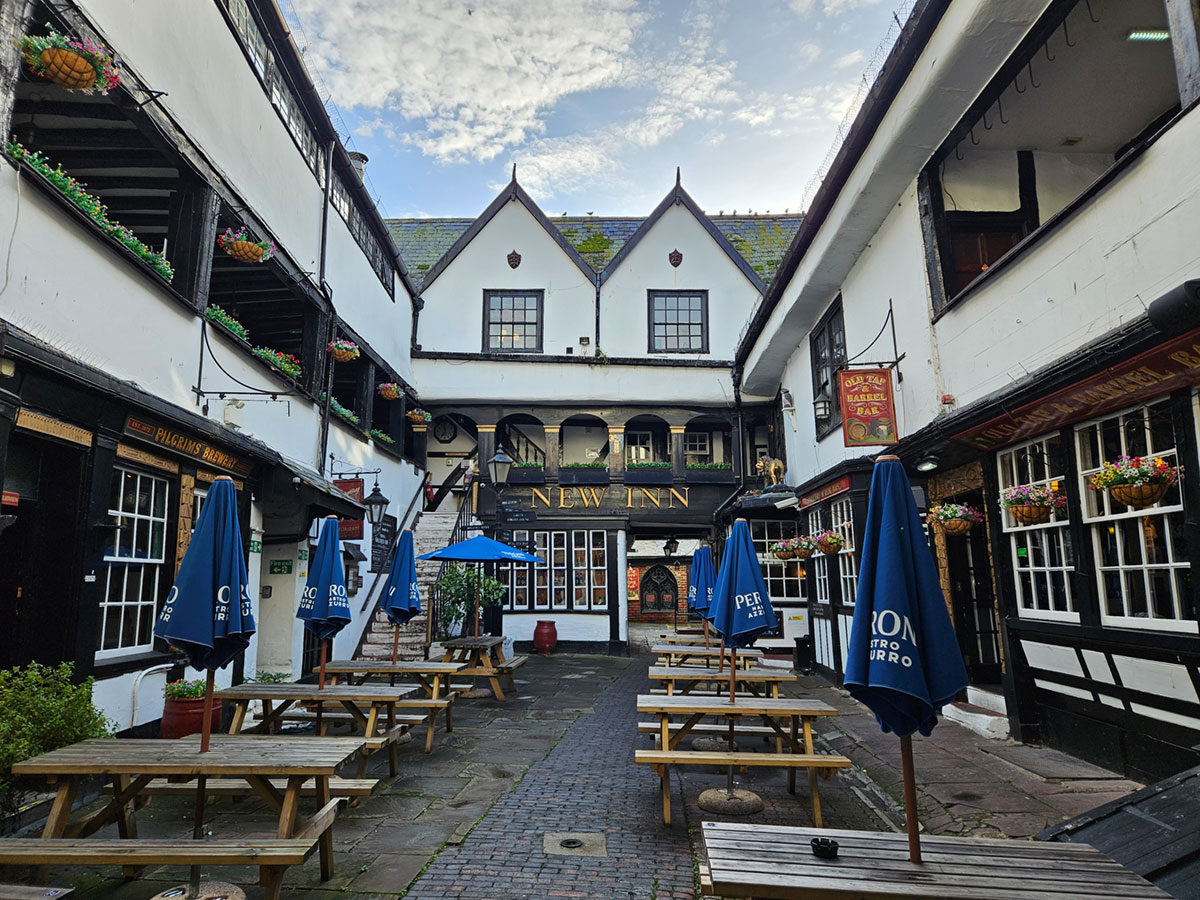
The courtyard and galleries of The New Inn, looking towards the rear carriage way and yard.
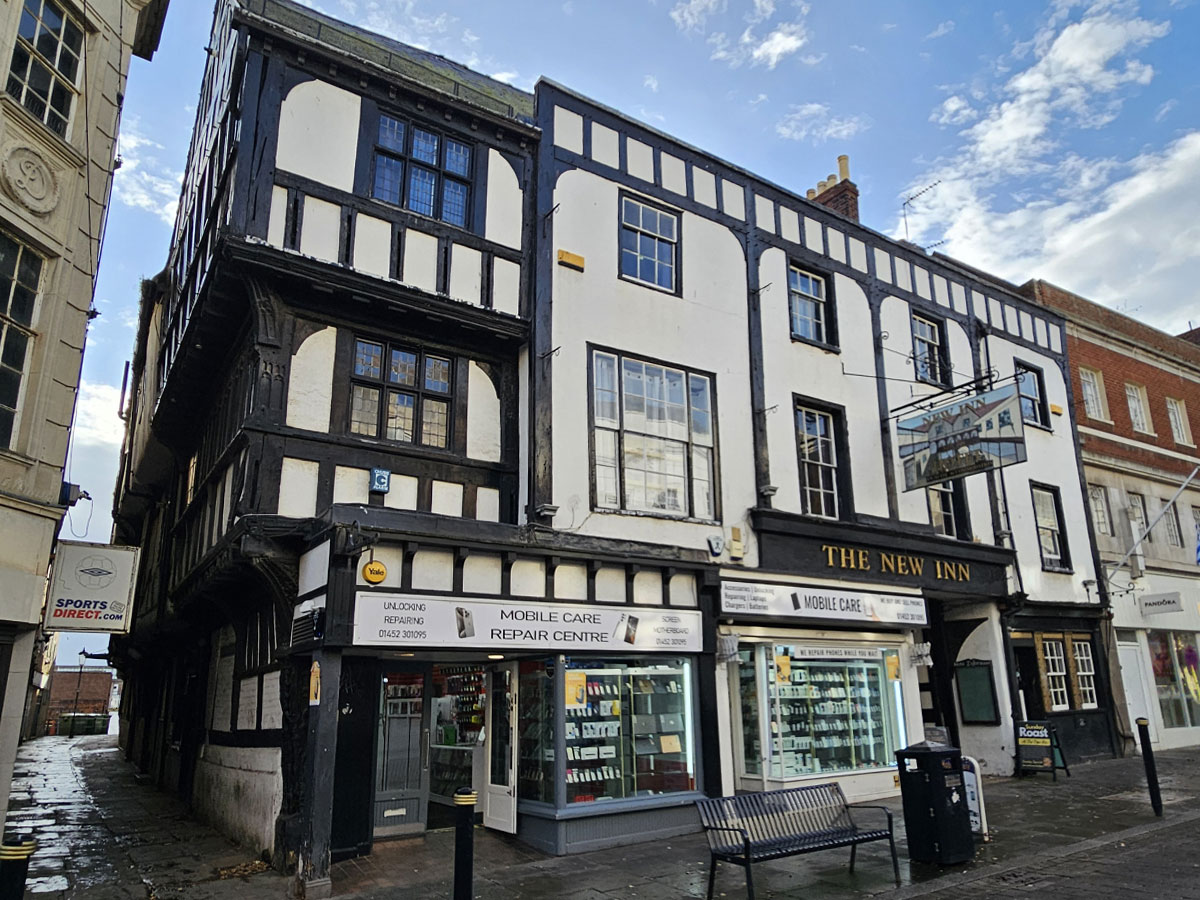
The front – and arguably, least impressive – view of The New Inn on Northgate Street in Gloucester.
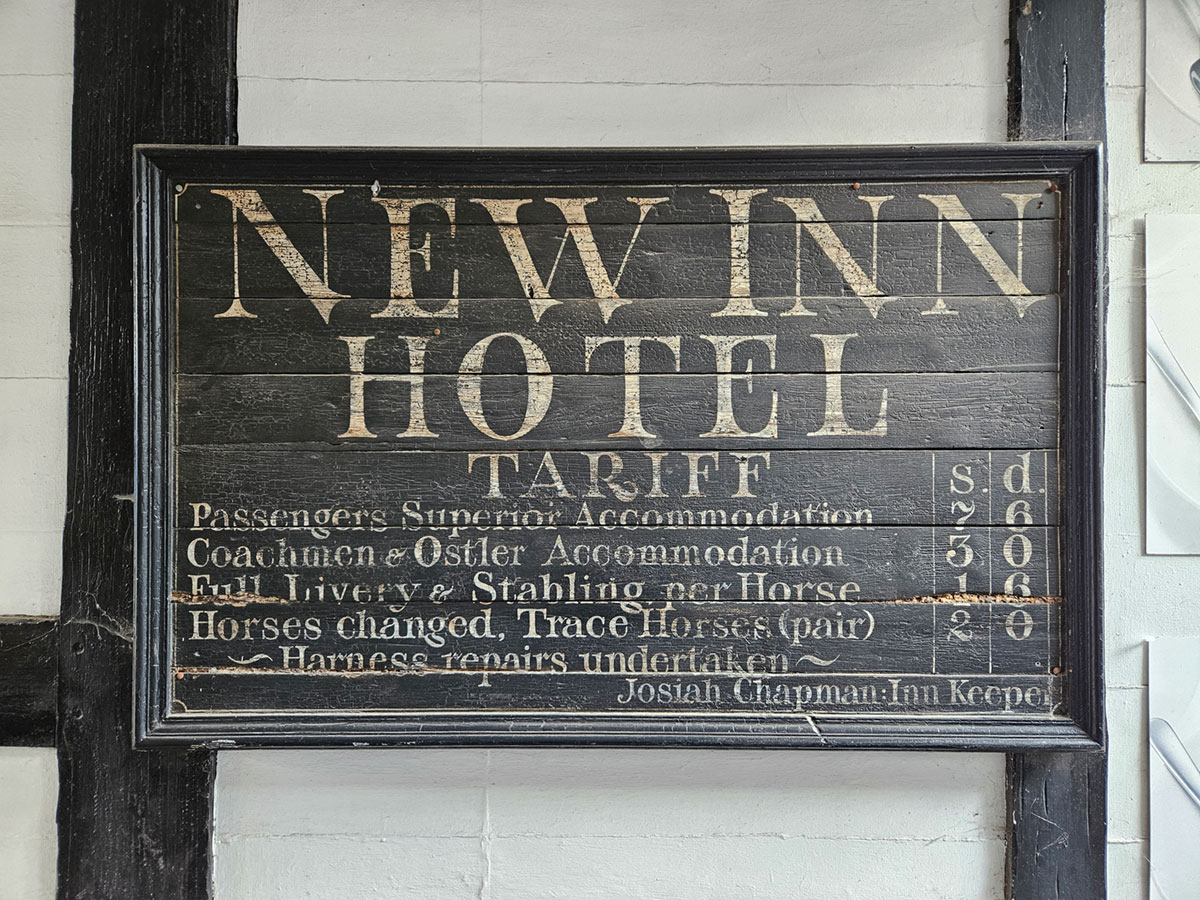
Presuming this tariff is from the time at which the inn was built (and using the Bank of England’s pre-demical currency converter and inflation calculator tools), the cost of superior accommodation in the mid-15th Century would be close to £400 in today’s money.
Writing
An email time machine was able to complete its 20-year mission to send letters to future selves not thanks to technology, but human relationships.
Top three of 2025
Most popular
- What happens on medieval pilgrimage, stays on medieval pilgrimage (NSFW-ish)
- Women’s role in writing the historical record
- Exploring the lives of women through the instructions they left for their deaths
Favourite
(Both the pilgrim badges and women’s wills stories listed above are also among my favourites.)
- The development of commercial photography in the 19th Century was liberating for women
- The historical treasure trove emerging from a family photography business
- The paintings that couldn’t save a marriage (even if they’d tried to, which we can’t definitively say they did)
And finally, in exciting news, linked to one of my previous year’s favourite stories: the film and sound recordings portion of David ‘Doc’ Rowe’s unique folk customs archive has been acquired by the British Library, saving it for future generations.