Below you’ll find links to some interesting history-related articles I’ve read (and watched/looked at) recently, a photo from a history-related visit, and an item about the history/practice of writing.
Enjoy!
History writing
- In the early 20th Century, “an era known as the ‘nadir’ of American race relations because of escalating anti-black violence – and when few libraries or learned societies admitted Black readers – bibliophiles met the moment by turning their private parlors into public spaces.” One such person was Arturo Schomburg, for whom “every book or portrait he acquired was one more piece of what he called ‘vindicating evidences’ of Black humanity and achievement”.
- A fascinating story about time-keeping and distribution in 19th-Century London, particularly the women who prevailed in the business despite attacks from rivals.
- I really enjoyed this lecture about the crowd-sourced production of the Oxford English Dictionary in the late 19th and early 20th centuries, which includes plenty of impressive stats and colourful people.
- A chance archival discovery is shedding light on people who survived the 14th-Century ‘Black Death’, a part of history largely unexplored because the sheer scale of death dominates most research.
- In 1998 photographer David Seidner created John Singer Sargent-style portraits featuring the descendants of the painter’s original late 19th and early 20th-Century sitters. (Click the magazine page spread to view the pictures. No need to subscribe – just click off the pop-up prompt if/when it appears.)
History
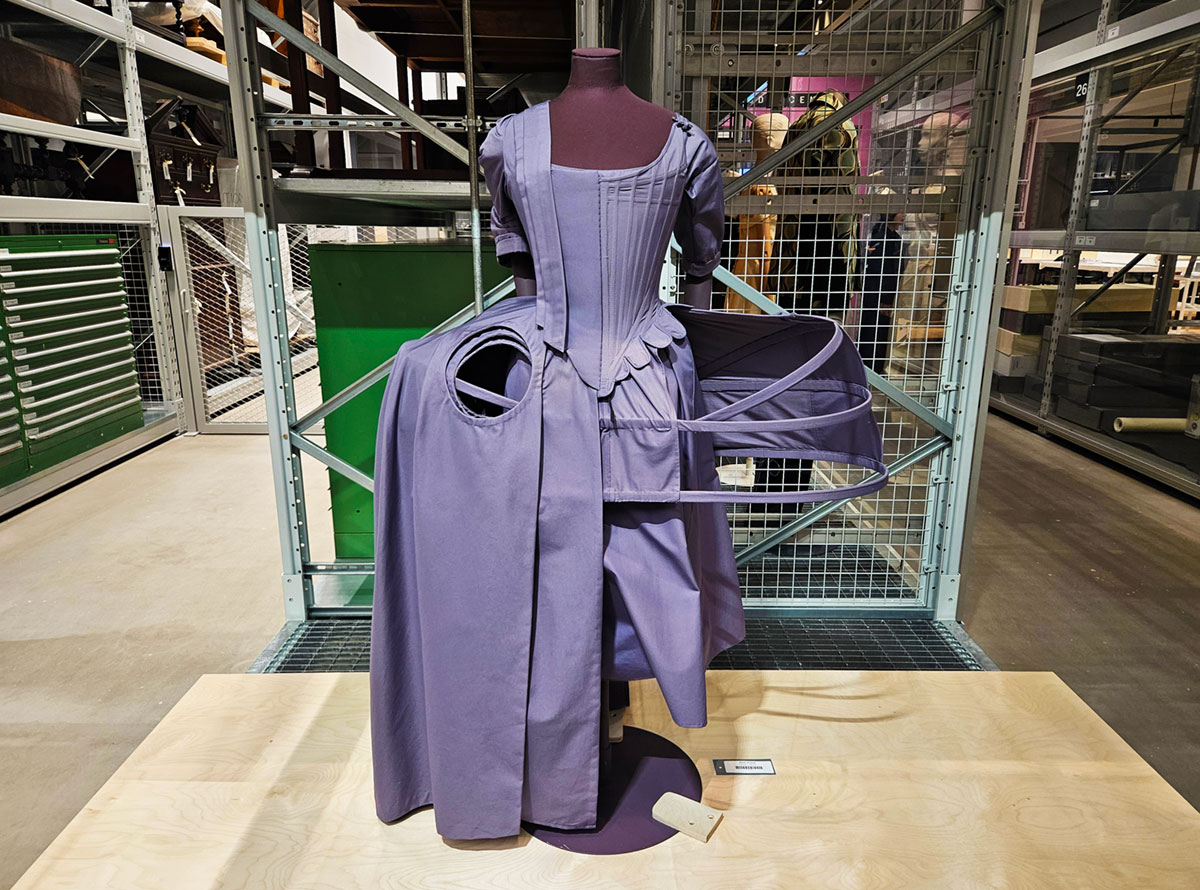
From the middle of the 17th to the end of the 19th Century it was common for women to wear their pockets attached to a strip of fabric tied around their waist, underneath their skirts or dresses. This crossed over with a period (the early 18th Century) when a type of dress called a mantua was popular at the English court. It’s characterised by an extremely wide skirt; so wide the wearer would need to pass through doorways sideways.
On a recent visit to the V&A East Storehouse (the Victoria & Albert’s new-ish publicly accessible warehouse of many of the items not able to fit in its museums) I got a glimpse of how these two fashion items worked together.
The above ‘dress’ shows not only the inner structure that supported a mantua gown, but the hole through which the wearer could access their internal tie-on pockets.
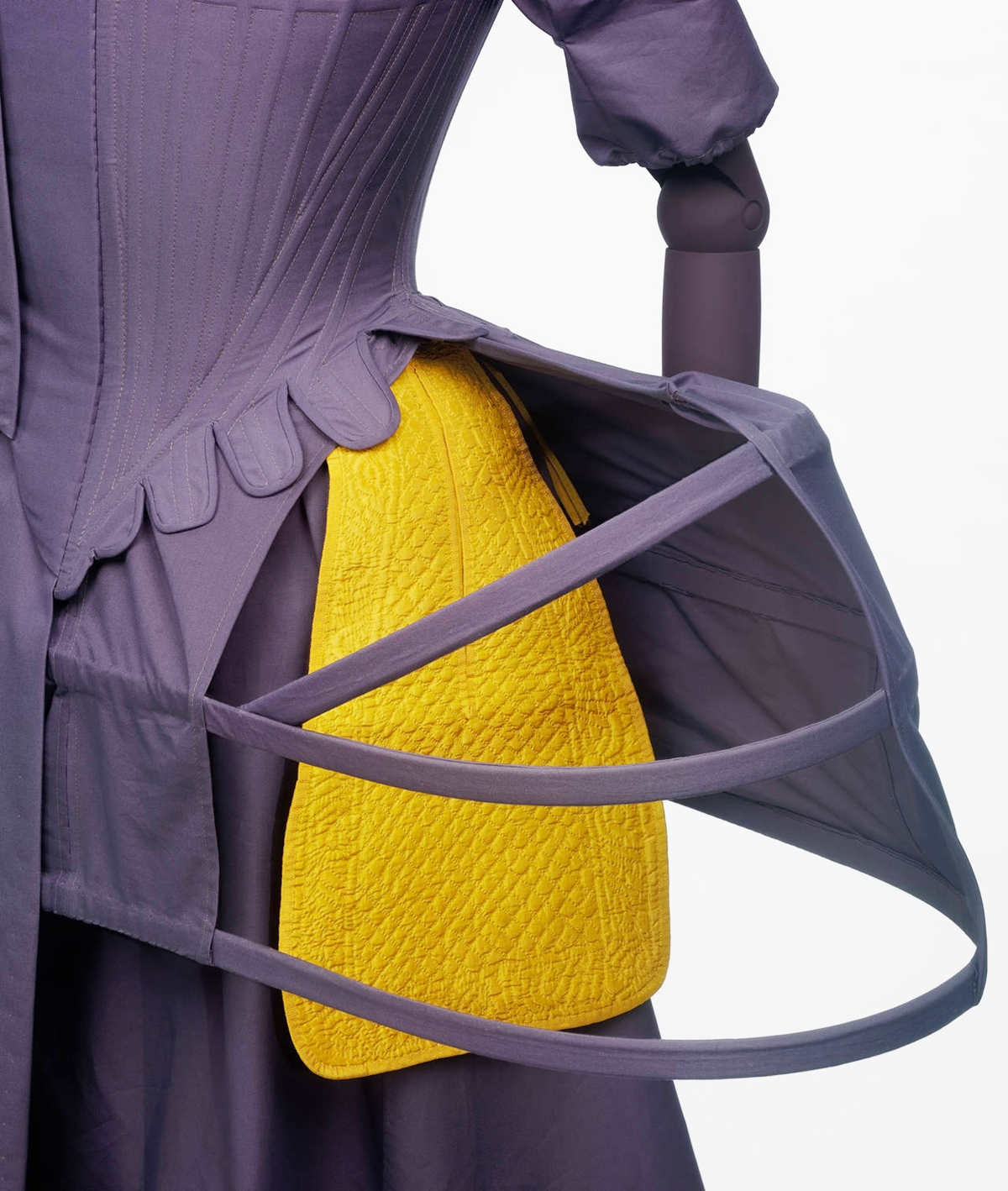
Pocket displayed on a mannequin to illustrate how they were worn under garments, from the ‘Bags: Inside Out’ exhibition. Image © Victoria and Albert Museum, London.
The V&A East Storehouse has made part of its mission to reflect the local community. I couldn’t fault it for the fact it had three West Ham United Football Club pieces on display when I visited (the team’s stadium is in the same Queen Elizabeth Olympic Park precinct), including this intriguing Wedgwood Jasperware ‘medallion’, thought to have been made to commemorate the club’s 1975 English Football Association (FA) Cup win.
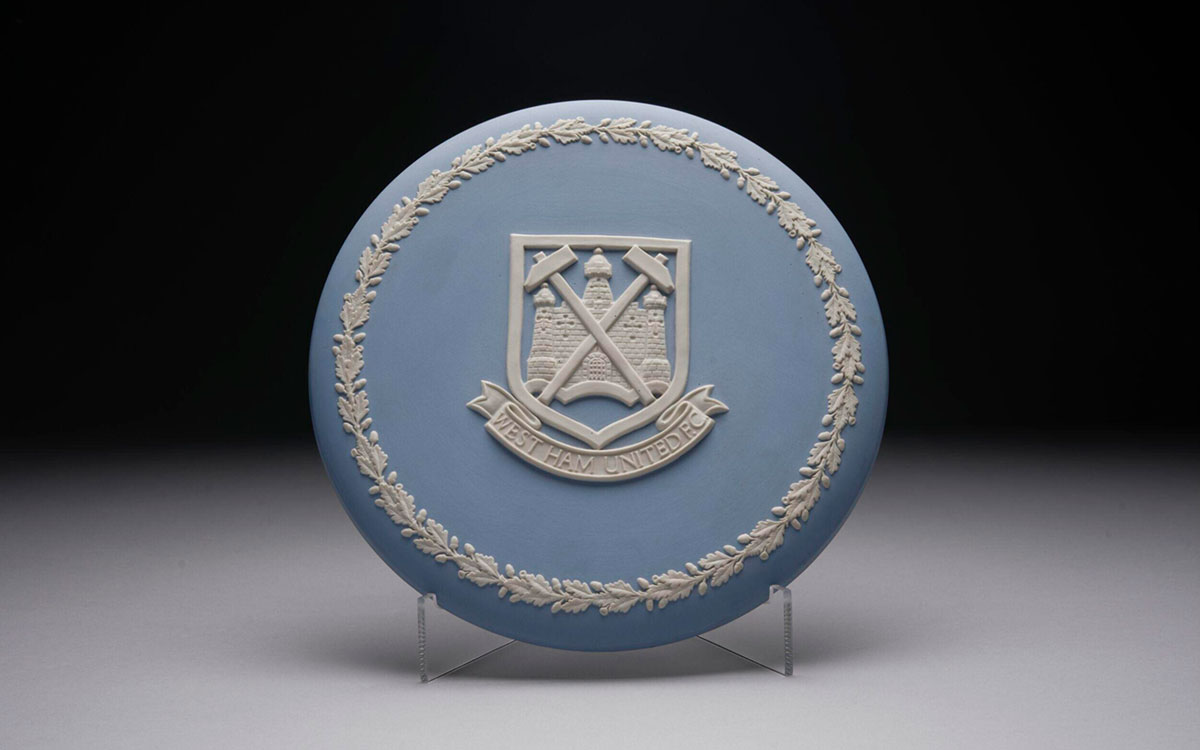
Medallion depicting the crest of West Ham United FC, jasper with applied relief (203mm diameter), Josiah Wedgwood and Sons, Barlaston, 1975. Image © Victoria and Albert Museum, London.
Writing
One of the few uses of AI related to writing that I can support is using the technology to decipher ancient and/or coded languages. A recent example is the discovery that a previously incomprehensible 400-year-old, 400-odd-page manuscript is filled with thousands of bizarre treatments such as: drink several glasses of high-quality red wine or ferment a nutmeg in dough to combat dysentery.
See also the AI-assisted transcription of 30,000 wills from the 1540s-1780s. Read the latest update from the University of Exeter-based team behind the project.