Below you will find links to some interesting history-related articles I’ve read recently, a photo from a previous history-related visit (the focus of which has been back in the news again), and an item about the history/practice of writing.
Enjoy!
History writing
- The on-going hunt for a rare California gold-rush-era book by the first Native American novelist, Cheesquatalawny (AKA Yellow Bird, AKA John Rollin Ridge).
- How Alice Martin turned the fragments of writing of the women in her family – stories of desire and yearning, of ambition and hidden pains; the things women have done and felt and hidden for centuries – into a novel.
- An American man has recorded 10,000 gigs – mostly rock and alternative artists – over the past 37 years; a group of volunteers is digitising and putting the music online. Explore the Aadam Jacobs collection.
- “This is [historical research] for you: after hours of looking at different kinds of sources and piecing together a narrative, you usually reach a point where you have to shrug, turn around, and walk back.”
- You may have seen the photo of the poor Victorian girl, but you probably haven’t known the story of the life of Adelaide Springett, until now.
History
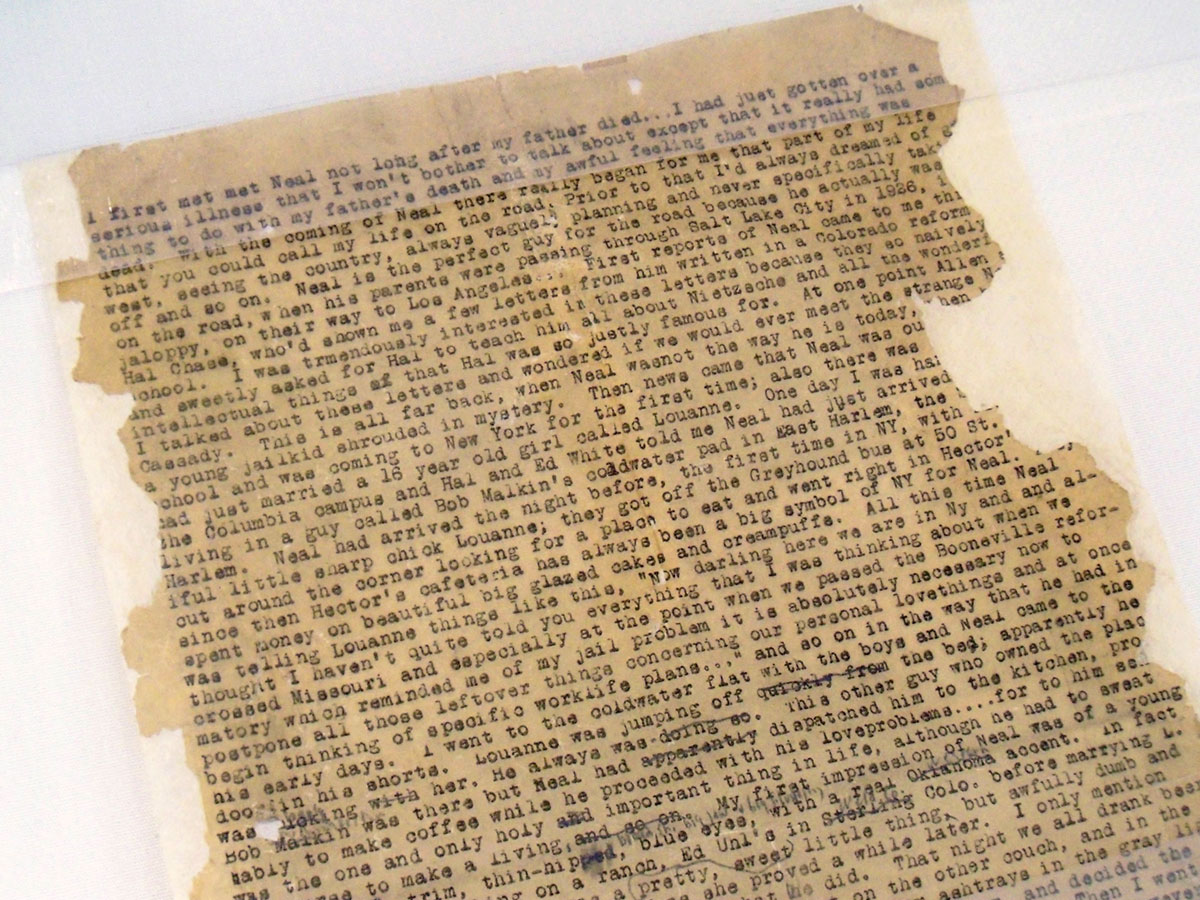
The original manuscript of Jack Kerouac’s ‘On The Road’. The finished novel differs in several ways to the first draft, including the changing of the real names of his friends to pseudonyms. For example, the scroll starts: “I first met Neal not long after my father died”, while the book begins: “I first met Dean not long after my wife and I split up”.
In October 2012, I was lucky enough to see, in the flesh – or, the fibre, I guess – Jack Kerouac’s original ‘On The Road’ scroll.
The manuscript was written over three weeks in April 1951. It’s 120 feet long, typed on a continuous length of pages Kerouac stuck together in advance to prevent his creative flow being interrupted by having to feed individual sheets of paper into his typewriter.
The scroll is now browned with age and ragged at the edges in places. It’s typed without paragraph breaks and features multiple pencil annotations – crossings out, bracketing of passages and paragraphs, sentences circled and arrowed into different places.
Just as Dean Moriarty (Neal Cassady) marvels to Sal Paradise (Kerouac) in the book, the scroll embodies the notion of just “getting it all down without modified restraints and hang-ups on literary inhibitions and grammatical fears”.
In March 2026, Kerouac’s original scroll was sold by Christie’s in New York for over $12million (almost £9m), making it the most expensive literary manuscript to sell at auction, regardless of period or origin. It beat its own earlier record of $2.4m/£1.8m (for a 20th Century work) in 2001, and the previous overall record holder, a copy of Shakespeare’s first folio, which sold for $10m/£7.4m in 2020.
Find out more, including the history of the demand for/value of other items that Kerouac left behind.
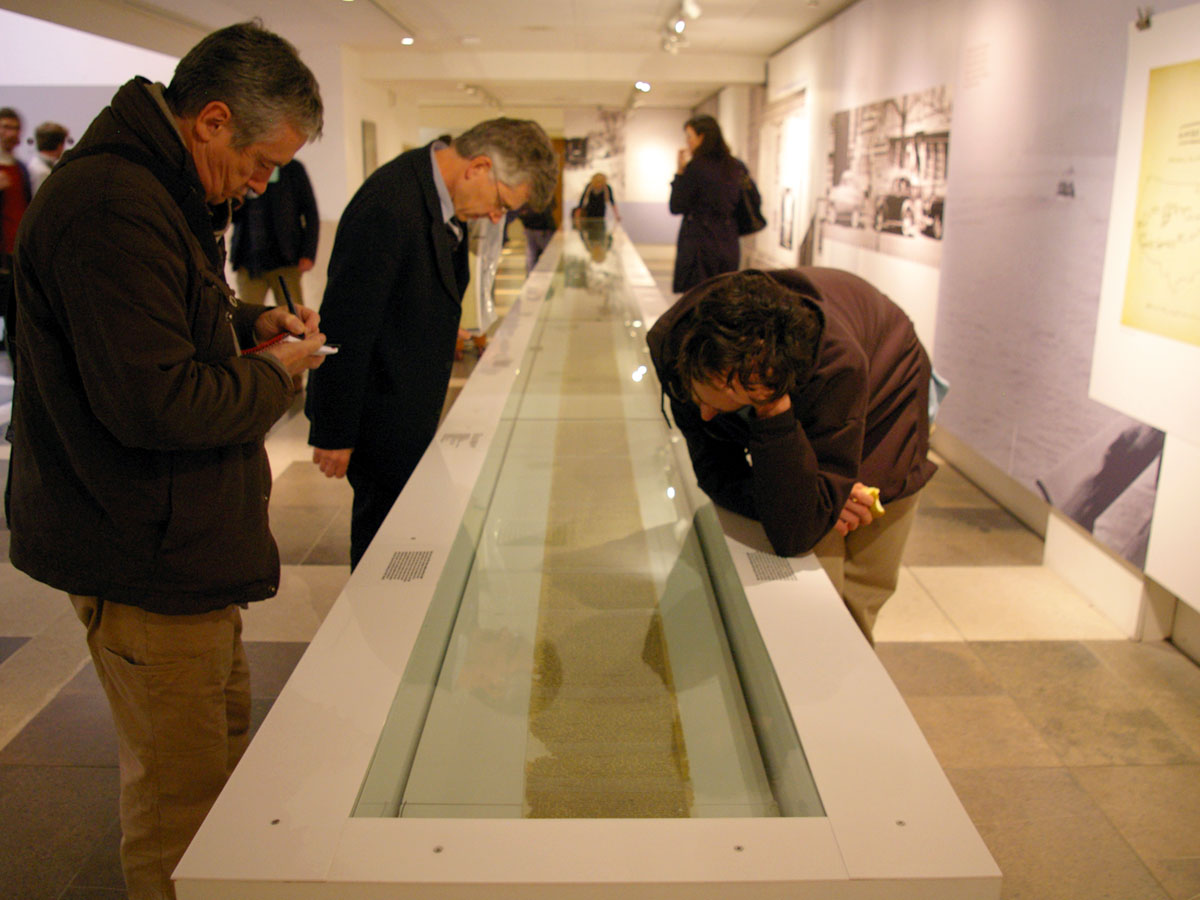
The first 50 feet of Kerouac’s scroll unrolled and on display at the British Library in 2012.
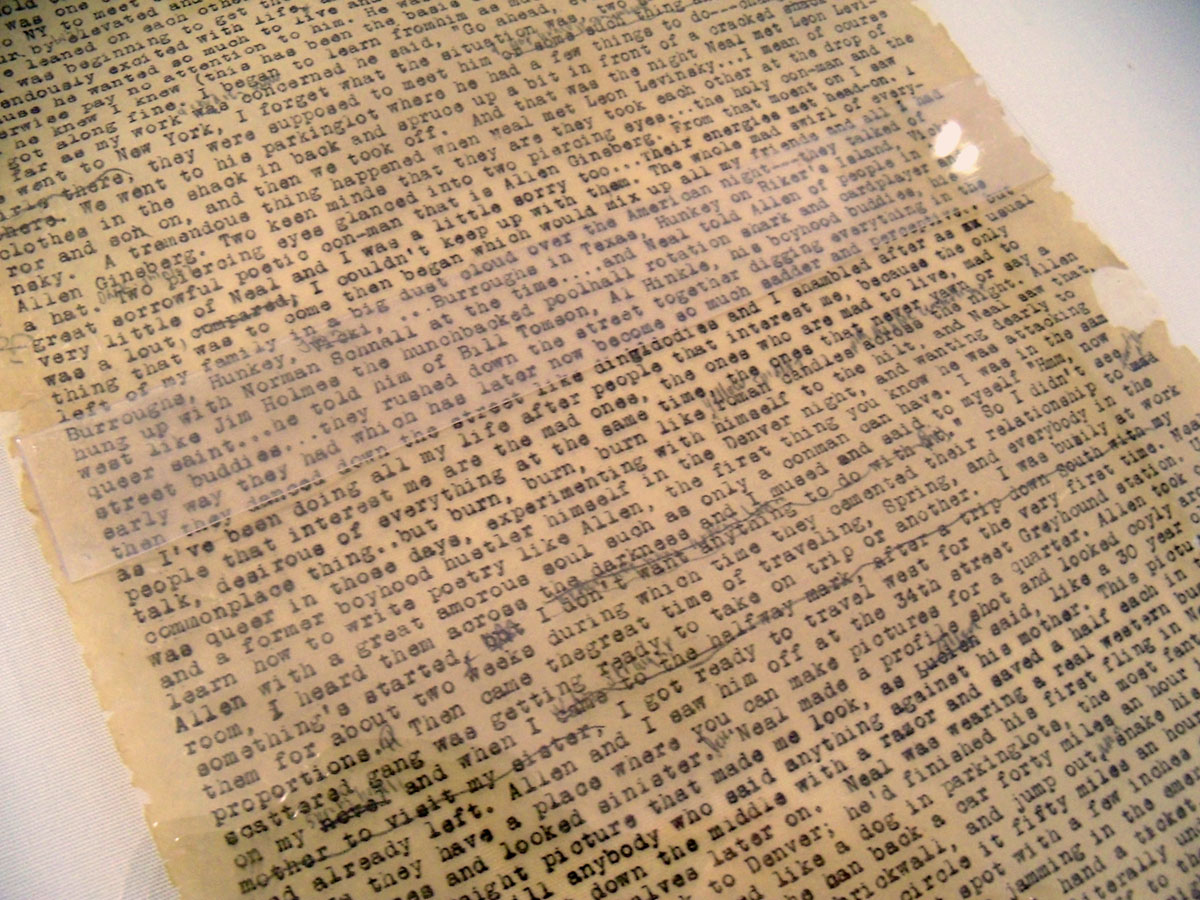
Just below the piece of plastic holding the manuscript flat is the famous ‘burn, burn, burn’ passage. On the scroll it reads: “[…] the only people that interest me are the mad ones, the ones who are mad to live, mad to talk, desirous of everything at the same time, the ones that never yawn or say a commonplace thing..but burn, burn, burn like roman candles across the night.” (It also has some pencil annotations, including the insertion of the word ‘yellow’ before ‘roman candles’). The version in the book reads: “[…] the only people for me are the mad ones, the ones who are mad to live, mad to talk, mad to be saved, desirous of everything at the same time, the ones who never yawn or say a commonplace thing, but burn, burn, burn like fabulous yellow roman candles exploding like spiders across the stars and in the middle you see the blue centrelight pop and everybody goes ‘Awww!’.”
Writing
Typos are embarrassing. I spotted one in my own story the other week (after I’d published it, of course) and I couldn’t have logged into my content management system to change it more quickly if I’d tried!
So spare a thought for – or take some comfort from – the writers and publishers featured in an exhibition at the Yale University Library all about literary mistakes.
Or do as James Joyce did and insist “These are not misprints but beauties of my style hitherto undreamt of.”