Below you will find links to some interesting history-related articles I’ve read recently, a photo from a history-related visit, and an item about the history/practice of writing.
Enjoy!
History writing
- Discover the extraordinary life and intellect of Francis Williams. His story was buried by an 18th Century bigot, now thankfully resurrected by a curious 21st Century historian.
- How sculpting a clay figure and holding it in your hand can bridge a tens-of-thousands-of-years gap between makers. “I feel swamped by the emotional resonances of creating her.”
- Pair with: What’s on the ‘Venus’ of Willendorf’s head?
- Anthropology students documented the graffiti in their university library before the building was demolished. (See the full collection.)
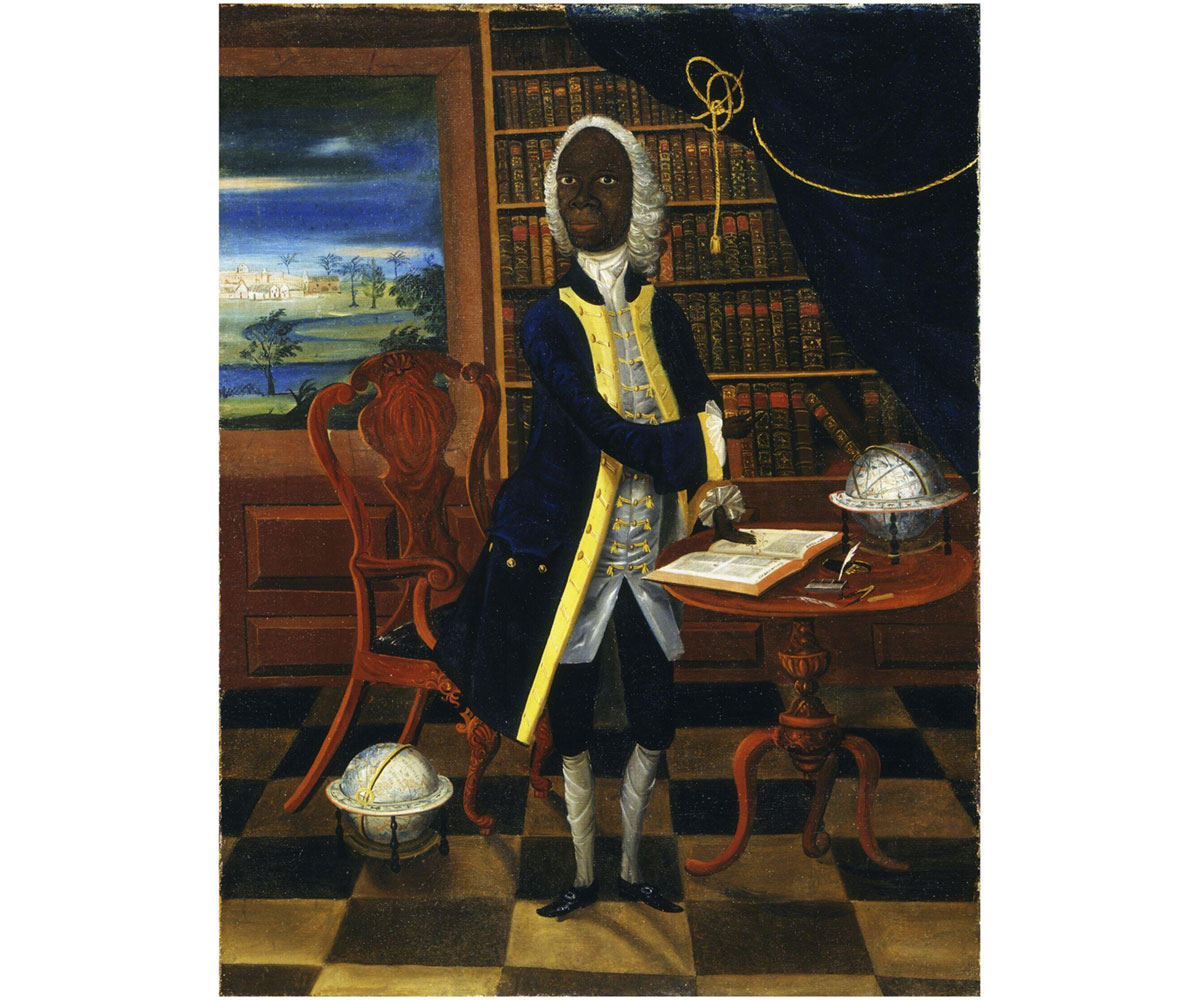
‘Francis Williams, the Scholar of Jamaica’, oil painting, c.1760. Image © Victoria and Albert Museum, London.
History

Ightham Mote, a medieval moated manor house in Kent, southeastern England, is home to the country’s only Grade 1 listed doghouse. The listing designates it of exceptional historic interest and gives it legal protection.
It was built in 1890 by the house’s then-owner, Sir Thomas Colyer-Fergusson, for a St Bernard called Dido.
Later, it housed two Pekingese dogs called Ping and Pong.
And the (human) house, and moat, in all its glory:

Writing
Bring back interleaved books!
From Jillian Hess’s examination of the naturalist Carl Linnaeus’s notebooks:
“In the 17th Century, writing in books was a common practice. So common, in fact, that books were sold ‘interleaved’, meaning that they had blank pages inserted. This is how Linnaeus continued to build on his botanical research. As he learned more about the flora he documented, he added notations that he could use in subsequent editions of this work.
This practice was so common that readers of Linnaeus’s work bought interleaved copies of their own so they could record their personal observations of the natural world alongside the great naturalist’s.”
If you want to learn more about Linnaeus’s efforts to classify all living things – and his rival Georges-Louis de Buffon, who was attempting the same thing at the same time – I recommend the History Extra podcast featuring Jason Roberts, who’s written a book on the ‘race to know all life’ (Apple | Spotify).